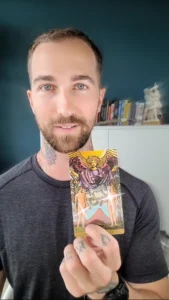
How Should You Approach a Tarot Reading? Depth, Intention, and Zero Lottery Numbers
Drawn to the mysterious allure of tarot but unsure what to expect? Rest assured, the experience isn’t about predicting lottery numbers or the arrival of a soulmate in a Prius. Tarot is a nuanced art, less fortune-telling and more a mirror reflecting your innermost truths, and approaching it with depth and intention is what separates a transformative reading from an expensive shrug.
Approach happens to be my favorite subject, since half of every great session is decided before the first card turns.
The other half, my style, my boundaries, and the shape of the hour itself, waits at what to expect from a reading. Spots on my calendar surface first for email subscribers, who also receive the preparation notes I never post publicly.
Does Tarot Offer Prophecy or Perspective?
Perspective, every time. Prophecy doesn’t return your calls.

A tarot reading provides insight, never absolutes. Rigid answers aren’t on the menu; what’s served instead is an exploration of the dynamics shaping your present and influencing your future, which turns out to be far more useful than any verdict.
Psychology agrees on the underlying muscle: cultivating self-awareness powers better decision-making and emotional clarity, as Psychology Today’s primer on intuition outlines, and a tarot session exercises exactly those faculties. Perspective compounds; prophecy just sits there waiting to be wrong.
How Do You Prepare for a Tarot Reading?
Leave the script at home. The cards don’t take requests.
When seeking a reading, leave preconceived answers at the door. Hoping for a specific outcome clouds the experience the way agitation muddies water; arrive still, and the depths become visible. The best readings explore the truth residing beneath your conscious desires, which is rarely the truth you rehearsed in the car.
Practical preparation helps too: rest, a clear intention, perhaps a written list of questions left unvoiced, a technique my clients know well. Even two minutes of grounding beforehand changes the session’s depth, and something as simple as the 5-4-3-2-1 method settles a racing mind before the cards get involved. Perception itself is trainable, something I unpack in how to increase your psychic abilities, and the openness you bring to a session is the same muscle in its earliest rep.
What Do the Tarot Cards Actually Mean?
A deck speaks in metaphors. Your life provides the translation.

Every card carries symbolic depth, from the quiet hope of The Star to the commanding presence of The Emperor. These images act as visual prompts, tools for reflection rather than directives, guiding you into the emotional and spiritual layers of your own life. A tarot deck speaks in metaphors, inviting you to connect with your own stories, and archives like Labyrinthos catalog the traditional vocabulary those metaphors draw from.
The universe tends to echo what the cards surface, sending its confirmations through synchronicities in the days that follow. My guide to following breadcrumbs from the universe teaches you to catch those echoes when they arrive.
Can Tarot Help with Life’s Big Questions?
Crossroads look smaller from the reading table.
The power of tarot lies in evaluating your current path. Whether you stand at a career crossroads or search for deeper meaning, a reading provides clarity by outlining potential scenarios shaped by your present energy and choices, never rigid predictions carved in stone.
Career transitions show this power at full strength; my post on navigating career changes traces how aligning decisions with higher purpose transformed my own working life, twice. The subconscious keeps its own counsel on these questions too, often at night, which is why psychic dreams so often echo what a reading revealed.
Should You Fear the Death or Tower Cards?
The deck’s scariest cards write the best chapters.
Cards like Death or The Tower may look intimidating, and their purpose is transformative rather than terrifying. The Death card signals renewal, an invitation to release what no longer serves you, and any seasoned reader will tell you these symbols carry the oldest wisdom in the deck: endings are gateways to beginnings.
In my sessions, the “frightening” cards produce more relief than fear, because they name what a client already sensed was over and grant permission to stop pretending otherwise. Nobody fears the Tower who was already tired of the building. Hollywood taught the dread; the cards themselves teach release, and one honest session usually undoes a lifetime of movie-trained flinching.
How Often Should You Get a Tarot Reading?
A snapshot needs time to develop, and frankly, you do too.

Think of a reading as a snapshot of your current state; revisiting over time reveals how your story evolves. Much like therapy or journaling, a returning practice offers perspective, uncovering patterns and recalibrating intentions, and the key word is rhythm rather than frequency.
My own boundary here surprises people: clients wait a minimum of three months between sessions with me, because a reading needs room to ripen in your life before the next one has anything new to say. Weekly readings produce dependence; seasonal readings produce growth. Any reader pushing you toward the first is serving their calendar, not your path.
Is Tarot Mysticism or Mindfulness?
Both, and the mindfulness part has receipts.
Tarot isn’t magic; it’s mindfulness wearing better artwork. Research consistently shows that structured self-reflection sharpens self-awareness and decision-making, a case Verywell Mind lays out, and tarot operates on the same principle, bridging intuition and analytical thought with 78 illustrated prompts.
Even committed skeptics keep discovering this on contact; Vogue’s essay on a lifelong skeptic falling for tarot reads like a conversion story written by the last person who expected one. Skepticism is welcome at my table; curiosity is the only entry fee.
Tarot isn’t about predicting the future; it’s about creating a congruent present. Approach a reading with curiosity and a willingness to reflect, whether you seek clarity in relationships, guidance on purpose, or simply a fresh perspective, and the cards become a valuable ally. Explore the realms of possibility, find deeper alignment within yourself, and let the reflection surprise you; it usually does.
Ready to experience a reading approached the right way from both sides of the table? Book your session with me here, held online wherever in the world your questions live.
Keep Reading
Chris Bennett turns away more readings than he books, thanks to a three-month rule that puts client growth ahead of his own calendar, one of the boundaries that built his standing as an internationally recognized tarot reader and evidential medium. He works exclusively online through The Tarot Medium with clients across the United States, Canada, the UK, Ireland, Australia, and New Zealand, with 200+ published articles and hundreds of five-star reviews behind the practice. Cards for reflection, clairs for mediumship, and therapy as the deeper work every reading supports: the lanes never blur at his table.