What Happens When Someone You Love Dies? 7 Things Almost No One Explains
Reading time: about 10 minutes. Number 1 is often the most surprising, and for many people, the most relieving.
People don’t come looking for answers about death casually. They arrive because something inside them is aching, shifting, or quietly asking questions that don’t fit into everyday conversation. You may be here because you’ve lost someone. You might be watching someone you love decline, or sitting with an experience you can’t explain and don’t want to dismiss or dramatize.
If you follow my work, you know I return often to the idea of surrender. Not as giving up, and not as letting go of love, but as maintaining trust with the unknown. Surrender is releasing the ego’s need to control timing, outcomes, or certainty; it’s recognizing that grasping for answers too urgently can deepen suffering rather than ease it.
Read all the way to the end; the countdown saves its most relieving truth for last. If you’ve never had a reading with me and want a sense of how I work, the tone, the boundaries, the clarity, you can read what to expect here.
For deeper guidance, exclusive offers, and first access to my most requested reading spots, join my email list here; I only send what’s meaningful, never spam.
7. What Actually Happens When Someone Dies?
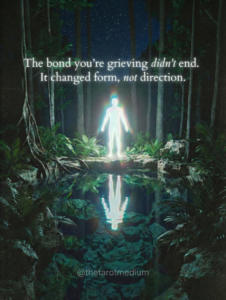
Consciousness doesn’t shut off. It warms, widens, and gathers.
I volunteer at a hospice once a week. I go because it sharpens my perspective on what’s crucial versus what’s superficial; hospice has a way of stripping life down to its essentials. Everything unnecessary falls away, and what remains is presence, memory, love, and the quiet courage it takes to let go. I’ve held strangers in their final breaths and sat in rooms where words no longer mattered. It’s an honor I never take lightly.
Recently, I sat with a woman who was clearly in her final moments. Her breathing had changed; her consciousness had shifted; what people often call the “death rattle” had begun. From a medical standpoint, the body was slowing.
From a psychic and spiritual standpoint, something else was happening entirely. As I sat quietly and softened my senses, I could feel warmth filling the room. Not heat, exactly. Presence. A surrounding gentleness that didn’t come from me.
Psychically, I sensed her reviewing her life. Not in judgment; in fullness. Who she had been, the roles she played, the responsibilities she carried, the way she showed up for others, every word, every emotion, every effort gathering into one coherent awareness. It felt like a crescendo rather than an ending. I could also feel others there: her mother, her father, two sisters, familiar presences that didn’t need introduction.
None of this could be validated; she was unable to respond, and there was no confirmation to be had. The presence was unmistakable anyway.
What surprised me most was how pleasant it felt. There was no fear in my body, no heaviness. It felt warm, reassuring, almost celebratory, like Christmas morning in the pit of my stomach. I gently prayed over her, not formally, not performatively. I asked for peace to find her, for her transition to be seamless, for her to move without pain or fear, and nothing else. I was there to witness.
That’s what hospice volunteering really is; we’re like living, breathing flowers, lending a bit of our life force to the space. Nothing more, nothing less.
From what I’ve witnessed, death is not the loss of consciousness. It’s a widening of it, a return to something familiar. No one crosses alone.
If you’ve ever wondered what consciousness looks like beyond the body, Deepak Chopra’s reflection on where we go after we die offers a perspective that feels expansive without being abstract.
6. Do Souls Stay Close After Death?
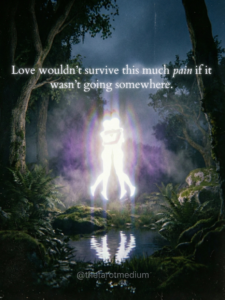
Relationship doesn’t shut off just because the body does.
Across many spiritual cultures, there’s a shared understanding that the soul remains close to family and familiar connections for a period after death. Orthodox Christian tradition describes forty days; Tibetan Buddhism’s bardo teachings speak of forty-nine. Different cultures, different language, same theme: orientation, closeness, gradual release.
From what I’ve witnessed, this closeness isn’t about being stuck. It feels like a gentle untethering; awareness loosens slowly, and the soul stays near what it loves because love doesn’t turn off abruptly.
At the same time, this early phase is often the hardest window for mediumship to land cleanly. When grief is raw, perception is heightened but unstable; everything feels charged, and it’s harder to tell the difference between genuine connection and a nervous system trying to survive loss.
That’s why I often suggest allowing time before seeking a mediumship experience. Not because connection isn’t happening, but because your system deserves to feel everything first. Six months isn’t a rule; it’s a kindness.
Nothing is missed by waiting. Your loved one’s awareness does not depend on your readiness; they are not impatient. They are living.
For a more psychological lens on why connection doesn’t feel severed, Psychology Today’s piece on how our loved ones live on after death puts language to something many people sense but struggle to explain.
5. Why Is Grief After Loss So Overwhelming?
Grief is love with no place to land.
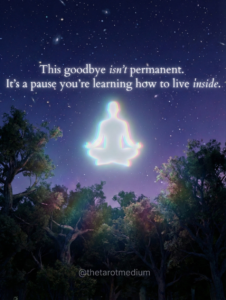
I’ve met people in their 90s in hospice who still want more time. That used to boggle my mind. Ninety years; how much more time do you need? Then I sat beside a woman in a bereavement support group who barely spoke, and when she did, her words carried weight.
Psychically, I could feel a road stretching back decades. She told me she met her partner when they were two years old and lost him in their 70s. “I don’t know who I am without him,” she said. “I just want more time.”
How do you untangle your identity from someone you’ve been intertwined with for that long? You don’t.
My belief is that we never get over grief; we move with it, we grow around it, an idea grief researchers call continuing bonds. Time doesn’t heal everything. Sometimes it just teaches you how to carry a grand piano no one else can see.
There’s no social indicator for grief. No timeline, no visible marker that tells the world you’re still learning how to exist. Grief is the price of loving deeply, and love is never wasted.
Grief doesn’t only change us internally; it reshapes how we relate to the world around us, a quiet shift this New York Times essay on grief and nature captures with honesty and restraint.
4. Do Loved Ones in Spirit Still Communicate With Us?
Yes. It’s just a different language.

Communication after death is very rarely auditory. It’s emotional, energetic; it comes through timing, sensation, memory, and quiet recognition. Signs are usually subtle because subtlety protects the nervous system; obvious signs would overwhelm most people. Signs aren’t meant to convince. They’re meant to reassure.
When people chase signs, they often miss them. When people soften, they notice them. It’s like learning a new language, one that doesn’t interrupt your life but gently overlaps it.
3. Is My Loved One in Spirit at Peace Now?
Death doesn’t carry punishment. It carries understanding.
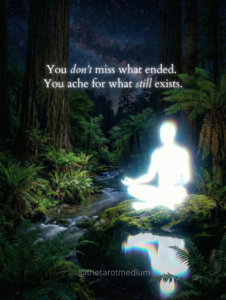
This is one of the quietest questions people ask, and one of the heaviest. It often shows up late at night, when everything else goes quiet. People worry about whether their loved one is okay. If they’re resting. If they’re safe. If mistakes they made in life still matter now.
From what I’ve witnessed, death does not come with judgment the way we imagine it. There is an awareness that unfolds, yes, a reviewing of life, and it isn’t harsh or condemning; it’s relational. Perspective widens. You feel how you lived through the eyes of others and understand the impact you had, not to be punished, but to fully know yourself.
For people who lived gently, this can feel affirming. For those who struggled or caused harm, it can be sobering, and even then it isn’t cruel. It’s clarifying.
One thing that brings a lot of people comfort: asking for your loved one to be with you does not disturb their peace. It doesn’t pull them away from tranquility or rest. Time and space are human constructs; they don’t exist in the same way where your loved one is now.
Presence doesn’t require distance, and being aware of you doesn’t take them away from anything else. Your loved one is not choosing between being at peace and being connected to you. Both exist at the same time.
They are also not alone. Reunion is a real part of what follows death: loved ones who passed before them, familiar bonds, even pets. The sense is not isolation but gathering, recognition without explanation.
Nothing is hidden, nothing is weaponized; what replaces fear is understanding, and what replaces regret is context.
From everything I’ve witnessed as a psychic medium, peace is not something your loved one has to earn. It’s something they naturally return to, and your love, your thoughts, your longing do not take them away from it.
If you’re curious how spiritual traditions understand communication after death, this overview on messages from beyond explores why signs are often subtle, personal, and emotionally specific.
2. Will I Ever See Them Again?
Separation is physical, not existential.
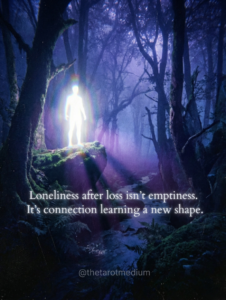
This question usually isn’t asked out loud. It lives in the chest, showing up when the house is quiet, when routines keep going but meaning feels thin. People don’t always want guarantees; they want to know if love is still going somewhere, or if it truly ended where the body did.
From an evidential mediumship perspective, consciousness continues, relationship continues, and the bond you had doesn’t dissolve just because the form changed. What you shared mattered too much to simply vanish. Time, as we experience it here, is a human structure; where your loved one is, time doesn’t move in straight lines, and moments don’t stack the same way. That’s why something that feels endless to you can feel brief to them.
Waiting doesn’t feel like waiting. Separation doesn’t feel like abandonment.
When mediums talk about reunion, it isn’t usually described as a hope or a possibility; it’s described as a knowing, not something to be chased or earned but something that unfolds naturally.
I often say we’re already in what could be called the afterlife; we’re just experiencing it through bodies right now.
Consciousness doesn’t begin at birth and it doesn’t end at death; it changes vantage points. In that sense, none of us are going in opposite directions. We’re all moving along the same path, just at different places on it. We’re not losing each other forever; as Ram Dass so beautifully put it, we’re all just walking each other home.
Even in the waiting, love remains active. It still connects, still recognizes, still knows where it belongs.
For a grounded look at what the body’s final chapter actually involves, the Cleveland Clinic’s overview of dying offers clarity that softens a lot of fear.
1. What Do Most People Get Wrong About Death?
We think it’s an ending. It’s an exit from the stage.
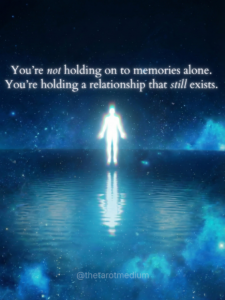
People hear phrases like nothingness or emptiness and imagine disappearance. What’s actually being described is infinite awareness: consciousness without edges, love without limits. True love sets something free. It doesn’t cling; it trusts that what is real will return in its own way, in its own time.
We’re drawn to theater, film, and stories because we practice loss there. We say goodbye to characters we love, knowing that backstage, life continues; costumes come off, stories keep moving.
Death isn’t the end of the play. It’s an exit from the stage. Your loved ones are very much alive. They’re just living in a different form.
If you enjoyed this article, I send out the occasional email that actually matters, along with exclusive news and offers; you can subscribe here without worrying about spam.
If this resonated and you want someone to sit with what you’re carrying, you can book your private reading with me here, held exclusively online wherever grief has found you.
If any of these speak to what you’re moving through right now, follow the one that pulls at you most:
- After death: What Happens After We Die? 12 Lessons from Spirit
- Quiet signs: Why You Still Feel Them: Signs and Synchronicity Explained
- Loved ones: 12 Powerful Signs Your Loved One May Be Reaching Out
- Mediumship truth: Mediumship and Death: What My Grandmother Taught Me
- Gentle clarity: How to Tell If a Sign Is Really from Your Loved One in Spirit
- Life questions: Life After Death: 8 Questions Everyone Asks
This piece was written by Chris Bennett, an internationally recognized psychic medium and tarot reader whose work is shaped by calm presence, careful listening, and respect for the realities people are navigating. With more than twenty years of direct practice, 200+ published articles, and hundreds of five-star reviews, Chris is known for an approach that values clarity over spectacle, emotional attunement without over-interpretation, and truth offered with restraint. His style brings intuitive insight together with grounded psychological awareness, often helping people put words to experiences they’ve carried quietly for a long time, while honoring therapy as the deeper support every session complements.
Chris works with clients exclusively through online sessions, connecting with people across Canada, the United States, the United Kingdom, Ireland, Australia, New Zealand, and beyond. No matter where someone is located, the focus remains the same: to meet them in the moment they’re in, listen without agenda, and offer perspective that supports clearer choices, steadier footing, and a sense of continuity moving forward.