What Happens After We Die? 8 Real Answers for When the World Feels Hollow After Loss
Reading time: about 14 minutes.
What happens after we die? It’s the question that keeps people awake at three in the morning, the one whispered after funerals, the one nobody really wants to ask out loud. If you’ve found yourself here, chances are you’re not just curious; you’re aching.
Grief doesn’t come as a tidy wave; it guts you. There’s the hollowed-out feeling, as if someone reached inside and took something essential you can’t name. There are the small, stabbing questions: Why didn’t I say more? What if they didn’t know how much I loved them? Am I strong enough to keep going without them?

Loss shakes more than your memories of them; it shakes you. The version of yourself that existed before they died no longer fits, and suddenly you’re navigating a different identity: part mourner, part survivor, part wanderer in a world that no longer feels quite real. You’re not just grieving who they were; you’re grieving who you were alongside them. In the quiet moments, lying awake in the dark, folding laundry, staring into space, you might wonder: Where did they go? Are they still here? Will I ever feel them again?
That’s why I wrote this. Not to hand you clichés or neat answers, but to walk with you through the eight questions I hear most often in my work as a psychic medium about life after death. These aren’t theories; they’re the questions people cry into their hands while sitting across from me, searching for signs, for reassurance, for something solid to hold in the storm.
This is a long read, so if you’re not ready for the deep dive, skim the section headers and the Key Insight notes; either way, take your time and stay until the end, because the #1 insight might surprise you. Let this be a pause in the chaos, a place to feel less alone while making sense of the hardest thing we face: how to keep living when someone we love has stepped into the mystery.
If you want support that’s personal, grounded, and evidential, I’d be honored to sit with you.
We can explore your loved one’s messages, clarify the signs you’re noticing, and help you feel steadier in the days ahead; you can book a session here, read what to expect from a sitting first, or join my email list, where reflections on grief and open booking spots arrive before anything reaches this blog.
8. Why Don’t My Loved Ones Visit Me in Dreams After They Pass Away?
Dreams are spirit’s back door. Grief can slam it shut.

Dreams are one of the clearest ways spirit connects. Unlike waking life, your defenses are down; you’re not busy rationalizing or dismissing what you see, you’re open. Visitation dreams stand out from regular ones: they feel vivid, sometimes with color more vibrant than waking life, and your loved one may not speak but simply radiate reassurance.
People often wake up crying, not from sadness but from the intensity of love that still exists, a phenomenon psychologists studying visitation dreams document again and again.
If you’d like to invite a loved one closer, try this simple practice: before bed, write their name on a small piece of paper and place it beneath a glass of water on your nightstand. This serves as a quiet, formal invitation, your way of saying, “I’m open to seeing you if you’re able.” Spirit often responds to symbolic gestures like this, because they engage both your subconscious and your heart.
Understand, too, that both of you are adjusting. You’re learning to live with absence while they’re learning to navigate a new landscape in spirit, and appearing in dreams takes an immense amount of energy from their side. It may take time. Grief itself can also block dream connections; when you’re caught in waves of sadness, doubt, or the frantic need for control, your emotions become too volatile for subtle psychic impressions to reach you.
Love, not fear, is the real bridge; love softens the edges and opens the channel.
Key Insight: Dreams are not just imagination; they’re a bridge for connection, one that opens more easily when you invite with love and allow with patience. My deeper dive into the territory lives at What Happens After We Die? 12 Lessons from Spirit.
7. What Signs Do Spirits Send to Show They Are Still With Us?
The sign is the pointer. Your memories are the message.

The ordinary world is spirit’s preferred language. What looks like a chance bird, a sudden scent, or a song on the radio is rarely random when it arrives with uncanny timing and an internal hit that makes your chest go quiet.
Here’s the part most people miss: spirits do not show up as the sign itself. They direct something in the physical world to catch your attention; if an animal, insect, or sudden movement appears, imagine it gently guided by an invisible nudge. Some mediums describe this as subtle influence on electromagnetic fields; whatever the mechanism, the sign is a pointer, not the messenger.
When a sign appears, don’t rush it. Pause, and notice what memory surfaces first, because those memories are the message. Maybe a cardinal recalls a joke your father told, or the smell of baking summons a precise afternoon with your sister; the content that bubbles up is what they’re offering you. The feeling will be intimate and familiar rather than theatrical, arriving as if it were your own memory rather than a dramatic reveal. That is how spirit speaks: through the nuance of your life. A practical practice: when you notice a sign, name it out loud, say the person’s name, note the first three images or feelings that come, and write them in a small notebook. Patterns emerge over time, and those repeating threads are the language your loved ones are using.
Key Insight: Spirit points with everyday things. The sign is a prompt; pay attention to the memories and feelings that surface, because those are the true messages. For those missing a beloved animal, my guide to the first signs pets send after passing will help you recognize them.
6. Will I See My Family and Pets Again in the Afterlife?
Reunion is real. Love keeps the thread unbroken.

This question carries both longing and fear. The ache of missing someone you love, whether a parent, partner, child, or even a beloved pet, comes braided with the hope that reunion is possible. Most spiritual traditions affirm that it is, and mediumship confirms it too. In countless readings I’ve witnessed loved ones come forward with validations only their family would know, and pets bounding through with the same quirks they had in life, only lighter, freer, and without the weight of illness or pain.
What I’ve come to know through both readings and personal experience is that we typically remain close to earth for around 40 days after passing. During that time, spirit stays near the body, friends, and family, reassuring, adjusting, and beginning to understand its new form; only afterward does the transition move fully “into the light.” Grief researchers arrive at a parallel comfort from the clinical side, finding that continuing bonds with those we’ve lost are healthy rather than something to sever.
My personal perspective runs a little unconventional: I consider this world, the one we’re in right now, to be the afterlife. When we die, we’re not cast into a foreign place; we return home. I often imagine it like droplets of molten glass moving away from the glowing mass: each of us takes on a temporary shape, an individual human life, to learn about fragility, depth, and oneness, and eventually we return, rejoining the whole. What looks like separation is just a stage of becoming. For those grieving, this matters deeply; you’re not facing an eternal goodbye but moving through a temporary chapter of distance before an inevitable reunion, one already seeded in the bonds you feel now.
Key Insight: Relationships don’t dissolve after death; they expand. Spirit remains close at first, then transitions into light, waiting for the day we reunite, just as droplets of glass return to the glowing source they were born from. Noticing strange patterns meanwhile? My guide to recognizing messages from spirit will help you decode them.
5. What Do Different Religions Believe About Life After Death?
The languages differ. The verdict is unanimous: we continue.
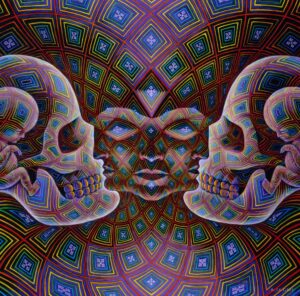
Beliefs vary widely: heaven, reincarnation, the ancestors’ realm. Though the languages differ, the thread is the same; life doesn’t end, it evolves.
Here is where I’ll level with you completely. I don’t consider myself religious, and I’ve had experiences some would call religious: what looked like other cultures’ gods appearing, clear, vivid, undeniable, witnessed by others standing beside me. My working understanding is that when enough people invest emotion, reverence, and attention into a shared vision, it becomes something; it develops weight, and can take on form, an entity of sorts, one that can oversee, comfort, or even guide.
None of this requires subscribing to a religion’s rules, and here’s my compass for telling the difference: anything that tries to control you tends to come from fear. Fear says obey, or else; fear says follow the path, or be punished. Love never controls. Love is unconditional. That’s why I lean away from religion and toward spirituality; religion tells you what to think, spirituality invites you to feel what is true. Step back from dogma and look at the lived experiences, dreams, signs, mediumship, near-death testimonies, and you’ll see the same pattern repeating: we continue, we’re guided, we are loved.
Key Insight: Across cultures, the consensus is continuity, not extinction. To understand how grief reshapes us along the way, read Grief Isn’t Linear, and It Rarely Looks How We Expect It To.
4. Do Near-Death Experiences Prove an Afterlife?
Survivors call it more real than life. Science can’t unhear that.

Near-death experiences are some of the most compelling testimony about what happens when the body shuts down. Across cultures, millions describe the same themes: tunnels of light, life reviews, overwhelming love, reunions with loved ones, and a peace that feels more real than life itself. Skeptics argue it’s just brain chemistry, and many who’ve had NDEs recall verifiable details from while they were clinically dead, things they couldn’t have known otherwise.
Actor Jeremy Renner’s 2023 snowplow accident is a powerful example. He described an “exhilarating peace,” a life review, and an intense desire not to return, admitting he was “pissed off” to wake up in his body again, as he told interviewers in CNN’s coverage of his account. The experience reshaped his life, leading him to focus on love, relationships, and living on his own terms, and that kind of transformation is strikingly common among NDE survivors.
Key Insight: NDEs don’t give us lab proof, but they offer remarkably consistent human testimony, strong evidence that awareness continues beyond death.
3. Can You Communicate With Loved Ones Who Have Passed Away?
A whisper, not a shout. Stillness is the receiver.

For many, this is the most urgent question, and mediumship exists to answer it. As a psychic medium, I’ve witnessed countless moments where names, birthdays, phrases, or even inside jokes come through with clarity no guesswork could explain, always through the clairs alone, never through cards or props.
Some of the greatest psychic medium readers I’ve ever met are mothers who have lost children. Their devotion drives them to do anything to feel their child again; in the early months the pain runs too raw, and after processing that first year or so, many discover that cultivating stillness opens the channel. Using breath and heartbeat as anchors and building a consistent relationship with meditation is what begins to unlock that sensitivity.
It doesn’t always come with fanfare. It’s subtle: a sudden sense of their presence, a voice in the quiet of meditation, or feeling them in a way that validates their life continuing beyond this state of being. This subtlety is why psychics are sometimes called “sensitives”; they attune to whispers, not shouts. Communication doesn’t mean the dead are stuck here; it means the bond of love continues, breaking through in ways both gentle and unmistakable.
Key Insight: Love outlasts the physical body. With patience, stillness, and openness, communication becomes possible, because love always finds a way through. For a deeply personal story of spirit showing up unannounced, read my dragonfly story of grief and healing.
2. Is There Scientific Evidence of Life After Death?
The brain is the radio. The signal has other plans.

Science, by design, studies what can be measured, and the afterlife can’t be placed under a microscope the way we analyze cells or blood. That hasn’t stopped science from brushing up against the mystery; some of the most credible evidence we have comes from the overlap of medicine and human experience.
Take near-death studies. Thousands of patients revived after cardiac arrest have reported verifiable perceptions, describing doctors’ clothing, instruments, or conversations that took place while their brains registered no activity, which is difficult to dismiss as hallucination. A well-known study in The Lancet led by Dr. Pim van Lommel followed hundreds of cardiac arrest survivors and concluded that consciousness may exist independently of the brain; he compared the body to a receiver, the brain processing consciousness without being its source, much like a radio picking up a signal that continues whether or not the radio works. The medical view of the body’s final hours is soberly mapped in the Cleveland Clinic’s overview of dying, which makes the anomalies stand out all the more.
There are also cases of “terminal lucidity,” where patients with advanced dementia or brain injury suddenly regain full clarity of mind in the hours before passing, something science struggles to explain if the brain alone produces consciousness. Add the consistent global reports of children recalling verifiable past-life details, and the suggestion grows stronger: our awareness is not confined to biology. Skeptics point to brain chemistry, while the data keeps nudging the other direction; science may not yet have the language, but it’s leaning closer to what spirituality has long said. Consciousness continues.
Key Insight: Evidence from medical studies, survivor accounts, and neurological anomalies suggests consciousness isn’t bound to the brain, raising powerful support for life after death.
1. What Happens When You Die?
Not an ending. A homecoming with the lights left on.

It’s the question we circle our whole lives, sometimes with dread, sometimes with wonder. From what I’ve witnessed as a psychic medium and sitting at the bedsides of the dying, death is not an end. It is a reunion. The moment the soul releases, the room changes, peace settles in, and a presence far greater than ourselves seems to gather us back home.
Maybe you’re thinking, Well, if it’s so great, why not go there now? The answer is that you’re here for a very specific reason. We come to earth to learn about love, the messy, imperfect, human kind; to discover the depth of our emotions, to stretch into grief and joy, heartbreak and healing. It isn’t easy, and it isn’t meant to be. The price of experiencing life in a body is loss, just as the price of knowing love is grief.
I believe this loss mirrors something larger: the same ache felt by what many would call God, Source, the Oversoul, or the spark of life itself when each of us incarnates here. A piece of the whole separates to learn and grow, and in that separation even the divine feels the absence. Your grief, no matter how crushing, is not lesser or greater than anyone else’s; it is shared, and you are not alone in it.
No psychic on earth can tell you exactly why the timing played out as it did; that mystery belongs to something larger than us. What we do know is that timing has a rhythm, even when we can’t hear the beat, and part of living is learning to trust that rhythm, to find your footing within it, so when the day comes to step through that door, it will not be fear you feel, but love welcoming you home.
Key Insight: Death is not an end but a reunion. We are here to learn love in all its fragile, human forms, and when our time comes, we return to the love that never left us.
What Should You Carry From All of This?
We continue. Live like that’s true, because it is.
Life after death isn’t a subject of idle curiosity; it’s a mirror to how we live right now. Whether you’re grieving someone you’ve just lost or quietly wrestling with your own mortality, these questions remind us that love, connection, and meaning don’t disappear when a heartbeat stops.
The unknown will always leave room for doubt. In the stories carried back through near-death experiences, in the validations that come through mediumship, and in the quiet everyday signs that stop you in your tracks, a deeper truth emerges anyway: we continue. Love outlasts the body, and reunion is not just possible; it’s inevitable.
Ready to take the next step in your own healing? Read what to expect in a reading with me, then book a session here, held exclusively online from wherever grief has found you.
Keep Reading
Written by Chris Bennett, The Tarot Medium
Chris Bennett is an internationally recognized psychic medium and tarot reader, regarded as one of the best in the world, delivering accurate readings and compassionate guidance exclusively online to clients across the United States, Canada, the UK, Ireland, Australia, and New Zealand. With thousands of sessions worldwide, 200+ published articles, and hundreds of five-star reviews, his work has been described as life-changing by those seeking clarity, connection, and comfort after loss.
Through his blog, often called one of the best psychic and tarot blogs available, Chris shares deep reflections on grief, spiritual growth, and intuition, weaving lived experience, evidential mediumship, and psychological insight into some of the most trusted resources in the field. His practice keeps clean lanes: tarot for psychic insight and reflection, mediumship purely through the clairs, and therapy honored as the deeper healing every session supports.
Whether you’re looking for an accurate psychic reading online, exploring spiritual mediumship, or wondering what happens after we die, Chris offers an unparalleled blend of authenticity and skill. Learn more or book your own session at thetarotmedium.com.