What Happens After We Die: A Medium’s Honest Answer
Death terrifies most people. Maybe it terrifies you.
You lie awake at night thinking about it. Nothingness. Loss. An idea that one day you just stop existing. I understand that fear. I’ve sat across from hundreds of people who carry it.
Something shifts, though, when you’ve spent years doing what I do: sitting across from people whose loved ones have come through in readings, volunteering in hospice, watching what actually happens at the end.
Here’s what I’ve learned: terror comes from thinking you’re separate. From thinking this body, this life, this identity is all you are. You’re not separate, though. You never were. When the performance ends, you remember.
This article is about what happens after we die, based on thousands of readings, hospice observations, near-death accounts, and patterns that show up across all of it.
It’s for anyone who’s experiencing death anxiety. Anyone who’s grieving, who just got a reading and needs something to sit with afterward. It’s not speculation. It’s what I know to be true.
It’ll take about 8 minutes to read. Stay with me through this one.
If you have never had a reading with me and want a sense of how I work, the tone, the boundaries, the clarity, you can click here to read what to expect from a reading with me.
If you want deeper guidance, exclusive offers, and first access to my most requested reading spots, click here to join my email list (I only send what is meaningful, never spam).
What Do People Who’ve Died Actually Say in Readings?
The patterns are too consistent to ignore
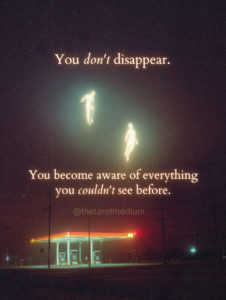
I’ve done thousands of readings. Mediumship sessions where people’s loved ones come through with names, details, personality quirks, inside jokes. Things I couldn’t know. Things the person sitting across from me didn’t even remember until I said them out loud.
Here’s what every single one of them communicates, in one way or another: they’re okay. They’re aware. They’re not gone.
They describe peace. Not the absence of pain, but the presence of something larger. Recognition comes next: seeing people they loved who passed before them. Reuniting with animals. Grandmothers. Friends. The dog they had when they were seven. Awareness without limitation follows. No body. No senses in the way we understand them. Awareness of everything around them persists.
No one who comes through in a reading says “I’m lost.” No one says “I’m alone.” No one says “I made a mistake leaving.” What they communicate, over and over, is: I’m here. I’m with you. I’m at peace.
Research published in the Journal of Near-Death Studies has documented thousands of accounts from people who were clinically dead and came back. The consistency is staggering. Across cultures, across religions, across belief systems, people describe the same thing: a sense of boundless awareness, unconditional love, and profound peace.
Sight doesn’t happen with eyes. Hearing doesn’t happen with ears. Awareness of everything remains.
Do We Really See Our Loved Ones Again After Death?
Everyone who comes through says yes
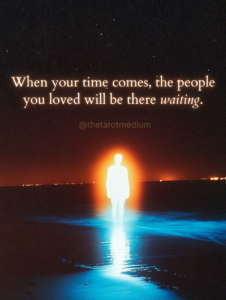
One of the first things people who’ve passed communicate in readings is who met them. The pattern stays the same: the people they loved who went before them.
A grandmother talks about her husband. A young man talks about his best friend who died in high school. A mother talks about the baby she lost decades ago. A woman talks about her dog.
It’s not metaphorical. It’s recognition. It’s reunion. It’s “I saw them and I knew them and everything made sense.”
I’ve seen this so many times that it’s no longer surprising. What surprises me is how often the person getting the reading didn’t even know certain people had passed. A great-aunt. A childhood friend. Someone their loved one never talked about but clearly mattered deeply.
The people you love are there. The animals you loved are there. When your time comes, they’ll be there for you.
Studies on deathbed visions show that in the days and hours before death, many people report seeing deceased loved ones. Hospice workers see this constantly. Patients who haven’t been lucid in days suddenly become clear, calm, focused. They look at a corner of the room, say a name, smile, reach out. Shortly after, they pass.
This isn’t hallucination. The patterns are too specific. The peace is too real.
What Happens to People Who Did Bad Things?
There’s a reckoning, but it’s not what you think
This is one of the questions I get asked most often. It matters because people carry so much fear around it. Fear that their loved one is being punished. Fear that they themselves will be judged and found wanting.
Here’s what I know from readings: there is a life review. People who’ve come through describe experiencing the full impact of their actions from the perspective of everyone they affected. Hurting someone means you feel what they felt. Causing harm means you experience that harm as if it were done to you.
External judgment isn’t part of it. You are the one reviewing your life. You are the one understanding the weight of what you did and what you didn’t do. Then you choose what comes next.
Autonomy remains. Free will remains. Love remains.
Research on near-death experiences published by the University of Virginia includes accounts of life reviews where people describe seeing their entire lives from a different vantage point. Not from a place of shame, but from a place of understanding. The purpose isn’t punishment. It’s clarity.
Here’s the other thing: no one is lost. No one is cast out. The people who caused the most harm are given the same opportunity for understanding as everyone else. What they do with that understanding is up to them.
Fear isn’t the framework. It’s love. It’s always been love.
Why Are We So Afraid of Death?
Because we think we’re separate
The fear of death is really the fear of separation. The fear that when your body stops, you stop. That the people you love disappear. That everything you are just ends.
That fear makes sense in a world that teaches separation from the moment you’re born. Borders. Politics. Religion. Ideology. Scarcity. All of it designed to reinforce the idea that you are separate from other people, separate from the divine, separate from anything larger than yourself.
The separation is an illusion.
We’re all one consciousness experiencing itself temporarily through billions of different perspectives. You. Me. Your sister. The stranger on the street. The person who hurt you. The person you loved and lost. We’re all the same thing, pretending we’re not.
When the body dies, the illusion dissolves. You remember. You recognize. You see clearly what was always true: you were never separate. You were never alone. You were always connected to everything.
A Course in Miracles, which I’ve studied for years, teaches that the entire human experience is the experience of forgetting our oneness and then remembering it. The fear, the suffering, the grief… it all comes from believing the separation is real. It’s not. It never was.
Theater comforts us because it mirrors that truth. We watch actors step onto a stage, play a role, experience real emotion, real stakes, real consequences. Then the performance ends. They take off the costume. They go home. We, the audience, feel relief because we know the actor is still there underneath the character.
That’s what this life is. A performance with real stakes and real love and real loss. Underneath the costume, you remain. When the show ends, you’ll meet everyone again backstage.
Do Animals Go to Heaven Too?
Yes, and they come through in readings constantly
One of the most consistent things I see in mediumship sessions is animals. Dogs. Cats. Horses. Birds. People’s loved ones come through and one of the first things they mention is the animal they’re with.
A father talks about the golden retriever the family had when his kids were young. A grandmother talks about her cat. A teenage boy talks about his horse.
It’s not symbolic. It’s literal. The animals are there. The bond continues. The love remains.
I’ve also done readings specifically about animals who’ve passed. They come through the same way humans do. With personality. With awareness. With connection to the people they loved.
Animals are conscious. They experience love. They form bonds. When they die, they continue. Just like we do.
Research from psychologist Dr. Rupert Sheldrake explores the phenomenon of animals appearing to sense when their owners are returning home, even from great distances. His work suggests that the bonds between humans and animals operate on a level that transcends physical proximity. Those bonds don’t break when the body does.
Lost an animal and wondering if they’re okay? They are. Wondering if you’ll see them again? You will.
What Does Dying Actually Feel Like?
Every account describes the same thing: peace
I’ve sat at the bedside of people dying, watched the moment the breath stops. I’ve seen the shift from struggle to stillness. I’ve also heard from people who were clinically dead and came back. What I’m about to share, is nothing sugar coated.
Here’s what they describe, over and over:
Sight doesn’t happen with eyes. Hearing doesn’t happen with ears. Smell, taste, touch… none of it works the way it does now. These are all human senses, designed for navigating a body in a physical world. One of best ways a patient described it, when I saw her with arms extended into the air from her bed was “Memory lane is coming to me.”
Many of them in lucid states near the end have described walking up a hill with a family member.
Awareness persists, though. Of everything. In a way that’s more vivid, more expansive, more real than anything you’ve experienced in a body.
You recognize people. You recognize places. You recognize moments from your life. Understanding them differently becomes possible. From a vantage point that’s outside of time, outside of fear, outside of the limitations you carried while you were alive.
A landmark study published in The Lancet followed cardiac arrest survivors who reported near-death experiences. What they described was consistent: a sense of peace, awareness beyond the body, recognition of loved ones, and a clarity they couldn’t fully articulate when they returned.
One man said: “I was more alive when I was dead than I ever was in my body.”
Some even describe looking down at their body as if it were a pile of dirty clothes that they wouldn’t want to put back on if they were given the choice.
That’s what death is. Not an ending. A shift. A remembering. A return to what you always were underneath the costume.
Why Are We Here If We Just Go Back When We Die?
The love you give is the only thing that remains
Knowing that death isn’t the end doesn’t exempt you from living this life fully. The separation might be temporary. The experience is real, though. The love is real. The pain is real. The connection is real.
The only thing that actually matters while you’re here is how you treated people.
Did you make them feel safe? Did you remind them they’re not alone? Did you see the divine in them, even when they couldn’t see it in themselves?
That’s the work. That’s all it ever was. It’s your life’s purpose, plain and simple.
Not accomplishments, or status. Not how much you accumulated or how many people knew your name. Those things matter in a human framework. There’s nothing wrong with them. At the end, though, when the body stops and the costume comes off, the only thing that remains is the love you gave and the love you received.
“Love thy neighbor. Be not afraid. The kingdom of heaven is within you.”
I was raised Catholic. I understand if that language makes you uncomfortable. The guilt and fear. The judgment. I once carried that too.
Here’s what I know now: the divine isn’t external. It’s not something you earn access to by being good enough or believing the right things. It’s inside you. It’s inside everyone. The kingdom of heaven isn’t a place you go. It’s a remembering, a recognition and a return to what was always true.
We’re all one entity experiencing the illusion of separation temporarily. The separation creates suffering because it makes us forget. We fight over borders. Resources. Ideology. Religion. We build walls, draw lines, convince ourselves that the person on the other side is different from us. Dangerous. Other.
They’re not, though. They’re you. Wearing a different costume. Playing a different role. Experiencing a different perspective.
When the show ends, we all remember that.
Does Grief Ever Go Away After Someone Dies?
It’s the price of admission for love
Grief is what happens when love has nowhere to go. When the person you poured your love into is no longer here in a body. No longer answering the phone. No longer sitting across from you at the table.
Grief is unbearable because love doesn’t end when the body does. The connection doesn’t break. The form changes, though. You’re left holding all that love with no clear place to put it.
Here’s what I tell people in readings: the love you feel for them, they feel for you. The connection you had, they still have. The person you miss, they’re still here. Not in the way you want. Not in a way you can touch or see or hold. Here, though.
One day, when your time comes, you’ll see them again. You’ll recognize them. You’ll remember. Everything that felt broken will make sense.
In the meantime, the work is to love the people still here. To see them. To remind them they’re not alone. To treat them the way you wish you’d treated the person you lost.
That’s all any of this ever was. An opportunity to love each other while we’re pretending we’re separate. An opportunity to remind each other that underneath the costume, we’re all the same thing.
Research from Harvard Health shows that grief activates the same neural pathways as physical pain. Your body processes the loss of someone you love the same way it processes a wound. It is a wound. A rupture in the fabric of your daily life.
The love remains, though. The bond remains. When the separation ends, so does the grief.
Terrified of death? I hope this gave you some comfort in things I know to be true. Grieving right now? I hope you feel less alone. Someone you love just passed and you need to know they’re okay? They are.
You’ll see them again. You’ll recognize them. You’ll remember everything.
In the meantime, the work is to love the people still here. That’s the only thing that’s ever mattered.
If you enjoyed this article, I send out the occasional email that actually matters along with exclusive news and offers. You can join here without worrying about spam: subscribe now!
If this article resonated with you, book your private reading with me here.
If any of these speak to what you’re moving through right now, follow the one that pulls at you most:
- Spirit presence: 12 Powerful Signs Your Loved One May Be Reaching Out
- Grief process: Grief Isn’t Linear (And It Rarely Looks How We Expect It To)
- Life continues: What Happens After We Die: 12 Lessons From Spirit
- Finding peace: Finding Peace After Loss of a Loved One
- Signs explained: Why You Still Feel Them: Signs and Synchronicity Explained
- Questions answered: 7 Questions People Ask After Losing Someone They Love
Chris Bennett is a professional psychic medium and tarot reader based in Canada, offering compassionate, evidential guidance informed by over two decades of dedicated practice. Specializing in authentic mediumship, intuitive clairvoyance, and psychologically grounded tarot interpretation, Chris delivers readings that prioritize clarity, emotional intelligence, and personal agency over theatrics or manipulation. Serving clients internationally through online psychic readings, mediumship connections, and tarot consultations across Canada, the United States, Australia, the United Kingdom, New Zealand, and beyond.