How Do You Make a Big Life Decision When You’re Overwhelmed, Burned Out, and Afraid of Choosing Wrong?
Reading time: about 9 minutes.
This has been a recurring theme in my work over the last few weeks. Different clients, different lives, the same crossroads you might recognize immediately. You’re wondering whether to stay or leave a relationship that no longer feels steady. You’re weighing a move to another country while changing careers. You’re choosing between security and a quiet pull toward something unknown.
On the surface, your situation looks unique; underneath, but the tension feels the same.
An email landed recently that stayed with me. “I need a psychic reading right away. I have a very big, very timely decision this week and I need you to fit me in.” I didn’t, I won’t, and I never will. Not because your decision doesn’t matter; it does. Urgency like that doesn’t belong in a psychic reading.
When you feel that level of pressure, what you need first is support for your nervous system, not direction. That’s therapy territory, not psychic work, and that email is one of the reasons you’re reading this.
You don’t benefit from surrendering your free will to anyone. Not to a psychic, a tarot reader, a coach, or a friend, and especially not in stay-or-go, should-or-shouldn’t situations.
If you want to outsource your life, you might as well flip a coin or shake a Magic 8 Ball; at least then you’ll notice your reaction to the answer, which is usually where your truth shows up anyway.
Ethical psychic work isn’t about deciding for you. It’s about helping you hear yourself clearly enough to decide from a place that’s actually yours.
If you’ve never had a reading with me and want a sense of how I work, the tone, the boundaries, the clarity, you can read what to expect here.
For deeper guidance, exclusive offers, and first access to my most requested reading spots, join my email list here; I only send what’s meaningful, never spam.
How Do You Make a Big Decision When You Feel Overwhelmed?
The problem usually isn’t the decision. It’s the state you’re deciding from.
Overwhelm convinces you that you’ve lost your ability to choose. That conclusion is almost always wrong. An overloaded nervous system narrows your perception; grief, fear, exhaustion, pressure, and constant stimulation push your mind into survival mode, and when that happens, your system looks for relief, not truth. Everything feels urgent. Every option feels permanent. That environment doesn’t produce clarity.
A more honest question than what should you do is whether there’s enough internal steadiness to hear yourself at all. You don’t need perfect calm; you need enough regulation that you’re not choosing as a way to escape a feeling. Decisions made to outrun discomfort tend to recreate the same discomfort later, just in a different setting.
Some of the most important decisions I’ve made came after doing very little. A hot salt water bath. Stillness. No conversations, no analysis, just enough quiet for my body to stop bracing. Salt water immersion helps your nervous system more than you realize; it slows your system down and interrupts mental spirals long enough for something truer to surface.
Clarity doesn’t respond to force. Space invites it. When everything feels heavy and urgent at once, a simple grounding practice like the 5-4-3-2-1 exercise reminds your body that clarity isn’t missing, only drowned out.
How Do You Know If a Decision Is Intuition or Anxiety?
Anxiety shouts and invents deadlines. Intuition waits.
Anxiety thrives on immediacy. It invents deadlines, exaggerates consequences, and frames your decision as a test you might fail. Intuition doesn’t operate that way. It arrives without drama, no argument or explanation, showing up as a sensation: tightness, ease, resistance, a subtle pull that doesn’t need defending.
Pace tells you a lot. When a choice feels like it must be made right now or something terrible will happen, anxiety is usually driving; your nervous system is trying to regain control. Intuition has patience. Time doesn’t threaten it. This is why sleeping on big decisions matters, not as avoidance but as practice.
When two paths sit in front of you, try saying “I’ll sleep on it” and actually do it, then do everything you can to properly unwind your body and mind for a deep, peaceful sleep; even slow breathing has measurable calming effects on the system that will be doing the deciding.
The next morning, before input or opinions, notice the very first feeling that appears. That first impression isn’t instinct; instinct reacts, while intuition recognizes. Honor that quiet first sense and you’ll notice how often it’s right.
If you’ve ever questioned whether you’re listening to intuition or reacting from fear, this therapist-informed piece on how clinicians distinguish intuition from anxiety offers a grounded lens for separating urgency from truth.
Why Do You Feel Stuck Making an Important Decision?
Stuck often means something hasn’t been grieved yet.
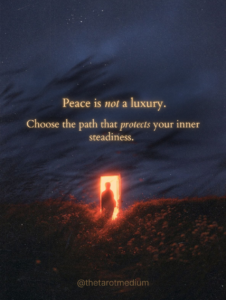
Indecision is often misdiagnosed. Loss is usually the real issue. Every meaningful decision closes a door; even the right choice requires letting go of a version of your life, your identity, or your future that once felt possible. When that loss isn’t acknowledged, your body resists movement.
You might tell yourself you’re being practical or cautious, but your system knows when something hasn’t been named yet.
This became clear in my own life years ago. I was offered a lucrative position abroad; international work had always been a dream. Financially it made sense, professionally it was validating, and on paper it was a clear yes. Everyone thought so. Friends called it once in a lifetime, colleagues were shocked I hesitated, and my partner told me he would support whatever I chose. Still, something wouldn’t settle.
One conversation changed everything. The person I spoke with understood how anchored I am by my dogs, my home, my routines, my connection to living things, and she asked one question: “How long would you be gone in dog years?” The cost of the decision stopped being abstract.
The answer arrived immediately, and I turned the position down. Not because the opportunity wasn’t good, but because it wasn’t right for what I truly value in life.
Sometimes clarity shows up through the question that reveals what you truly value. For those who feel stuck no matter how much they think something through, this article on the neuroscience behind indecision explains why the brain can lock up under pressure, even when the choice matters deeply.
How Can You Trust Yourself to Make the Right Decision?
Listen to your body instead of arguing with your mind.
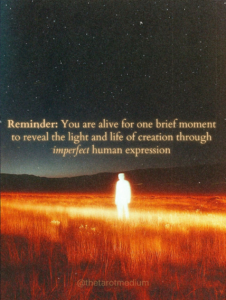
Your mind is excellent at collecting opinions. The problem is that people will always tell you what they would do; that information can be interesting, and it’s rarely decisive. Your body holds different data. Misalignment often shows up as heaviness, tightening, or a quiet resistance that logic can’t override, while alignment tends to feel calmer: less internal friction, fewer mental negotiations.
Trust doesn’t come from always choosing perfectly. It comes from listening consistently, and each time you honor what your body is communicating, confidence builds quietly, no dramatic breakthrough required. You don’t need to believe in intuition; you need to stop dismissing yourself.
This is where ethical psychic work actually belongs. If trusting yourself feels harder than making the decision itself, this Psychology Today piece on why self-trust comes before clarity speaks directly to that quiet inner doubt so many people carry.
If Ethical Psychics Don’t Decide for You, What Do They Actually Do?
Insight confirms. It never controls.
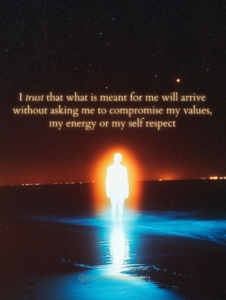
A good psychic doesn’t make choices on your behalf. A good psychic reflects what’s already present, often before you’ve articulated it, and that reflection strengthens trust instead of creating dependency.
A client returned to me recently and reminded me of a reading from about a year earlier. Before she shared anything about her situation, a theme came through around something stagnant finally selling.
October kept surfacing: a physical shift, a change of scenery. At the end of the reading, she told me she had a house on the market that had been sitting for a very long time; she didn’t think it would ever sell, and asked if that was what I was seeing. It was. That conversation ended there.
Nearly a year later, she told me why she came back. October 15th was the date the house sold and closed. Same month, same timing. There was no way to predict that; I didn’t know about the house or her plans, and accuracy wasn’t the point. What mattered was that her trust in her own unfolding deepened.
Her words were simple: “Now I want to see where I can let go even more.” That’s how insight is meant to work. Not as instruction, but as resonance; not as authority, but as confirmation.
What Does an Aligned Decision Actually Feel Like?
Not fireworks. The inner argument finally stops.
Fireworks are rare. More often there’s a quiet sense of inevitability: you stop rehearsing, you stop justifying, and the need to convince anyone fades. Sadness can still be present; grief often walks alongside alignment, and that doesn’t mean you’re wrong.
Sometimes alignment points toward waiting. Pause can be a deliberate and intelligent choice when it comes from listening rather than avoidance. Timing matters, readiness matters, and honesty carries more weight than certainty.
When you’re trying to sense what’s right rather than reason your way there, research on the science of intuition puts language to what it means to let the body participate in the choice.
How Does a Hospice Lens Balance a Big Decision?
Curiosity looks back. Legacy looks forward. You decide in the middle.
Hospice work sharpens perspective quickly. At the end of life, titles fade and achievements disappear; what remains is what you lived, loved, protected, attempted, and honored. When two options feel evenly weighted, step outside the present moment.
First, look backward. Imagine yourself as a child, looking up at who you are now, not with logic but with curiosity. What would that younger version of you hope you didn’t abandon? Then look far ahead. Imagine yourself much later in life, looking back, not judging outcomes but remembering choices.
Which decision would you be proud to have lived truthfully? Childlike curiosity keeps you from choosing out of fear; legacy keeps you from choosing impulsively. Between those two perspectives sits the present moment, and that’s where balanced decisions tend to emerge.
What’s a Quiet Exercise for Making a Big Life Decision?
Ten minutes. Not to decide, but to listen.
Set aside ten uninterrupted minutes. Put your phone away, turn off noise, and sit somewhere you feel relatively safe. Name the decision without analysis: this is the choice you’re facing. Picture having already chosen option A; don’t imagine the outcome, just the fact that the choice exists. Notice your body: tension, ease, heaviness, relief. Let the image go, then picture choosing option B the same way. Notice what shifts and what stays.
Avoid forcing a conclusion. Ask instead: what are you being asked to honor right now? Write down whatever comes up, even if it’s unclear or unsatisfying. Clarity doesn’t always arrive as an answer; permission to slow down is often the first signal. The right decision doesn’t require urgency.
Presence, honesty, and patience carry more weight, and that’s how decisions become something you can live inside, not just explain.
If you enjoyed this article, I send out the occasional email that actually matters along with exclusive news and offers; you can subscribe here without worrying about spam.
If this resonated and you want reflection rather than instruction, you can book your private reading with me here, held exclusively online from wherever your crossroads found you.
If any of these speak to what you’re moving through right now, follow the one that pulls at you most:
- Inner trust: The Real Reason Tarot Readings Help You Trust Yourself Again
- Decision clarity: How to Use Tarot in Daily Decision-Making
- Anxiety insight: Intuition vs Anxiety: How to Know What to Trust
- Feeling stuck: Feeling Stuck? Five Questions That Change Everything
- Life direction: Finding Meaning When Life Doesn’t Go as Planned
- Honest surrender: Why Surrender Feels Impossible Until You Hear This
This article was written by Chris Bennett, an internationally recognized psychic medium and tarot reader whose work centers on presence, discernment, and respect for the complexity of real human lives. With over two decades of hands-on experience, 200+ published articles, and hundreds of five-star reviews, Chris is known for a style that favors depth over performance, emotional accuracy over interpretation, and insight offered with care rather than force, always honoring therapy as the deeper support ethical psychic work stands beside. His readings often help people recognize and name truths they’ve felt but haven’t been able to articulate.
Chris reads for clients around the world exclusively through online sessions, connecting with people across Canada, the United States, the United Kingdom, Ireland, Australia, New Zealand, and beyond. Regardless of location, the intention stays consistent: to meet people where they are, listen without imposing direction, and offer perspective that supports grounded decision-making, inner steadiness, and a clearer sense of what comes next.