

The Illusion of Separation: Why Feeling Disconnected Hurts So Much
(and What It Really Means)
There is a specific kind of quiet that settles in when life keeps moving but you don’t feel fully inside it anymore.
Not dramatic, or obvious. Just a subtle sense that something essential slipped out of reach while you were busy surviving.
That feeling is not a flaw in your character or a failure of resilience.
Disconnection, loneliness, and that strange sense of being adjacent to your own life are not signs that something is wrong with you.
They are signals. Human ones. Especially in a world that asks for constant adaptation, performance, and emotional containment.
If you are here because something feels off and you can’t quite name it, that doesn’t mean you are lost. It means you are paying attention.
As a psychic medium, tarot reader, and hospice volunteer, I spend a lot of time listening beneath the surface of what people share.
Recently, underneath grief, spiritual questioning, and exhaustion, there has been a sharper undercurrent.
Anger without a clear outlet. Frustration that feels earned but unresolved.
A growing sense that systems once associated with care have shifted toward control, performance, or narrative management instead.
That emotional mix is often felt and then quickly judged.
Very few people say, “I feel separate from humanity.”
More often, the language sounds like, “I don’t feel like myself anymore,” or “I feel numb,” or “This world doesn’t feel familiar.” The experience can manifest as anxiety, emotional withdrawal, or a deep homesickness that lacks a clear origin.
This will take you 8 – 10 minutes to read. By the end of this article, the goal is not persuasion or reassurance through platitudes.
What matters more is understanding why separation hurts so deeply, why it feels intensified in this moment in history, and how remaining grounded and human is itself a spiritual practice.
If you’ve never had a reading with me and want a sense of how I work, the tone, the boundaries, the clarity, you can read what to expect here.
If you want deeper guidance, exclusive offers, and first access to my most requested reading spots, join my email list here (I only send what’s meaningful, never spam)
Why do I feel so disconnected from everyone?
That quiet distance you feel isn’t random or imagined. It usually begins as a protective response, not a personality flaw.
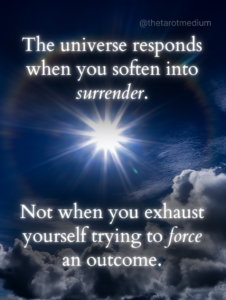
Recent years have kept many people in a prolonged state of low-level threat. Political instability, economic strain, global violence that refuses to recede, and belief systems imposed rather than embodied all take a toll.
In conditions like these, anger is not always the dominant response. Apathy often takes its place.
Anger still carries energy and engagement. Apathy shows up when the system decides it cannot absorb one more headline, argument, or demand without shutting down. Emotional range narrows. Curiosity thins. Presence becomes harder to access.
I noticed this shift in myself not long ago. Despite spiritual practices, meaningful work, and solid relationships, there was a flattening I could not ignore. Not despair. Not depression. A muted state that made it possible to keep going without fully feeling.
That numbness created a deeper sense of separation than grief ever has for me.
From a spiritual perspective, this is not failure. It is a contraction. An intelligent inward response when the outer world feels incoherent or unsafe. Trouble begins when that contraction is mistaken for identity rather than a phase.
It helps to work with this state instead of trying to override it. The nervous system does not need more stimulation or forced positivity. It needs evidence of safety and agency in small, concrete ways.
Fewer inputs. Clearer boundaries with news and conflict.
Gentle re-entry into the body through movement, temperature, breath, or time outdoors. Simple choices that restore a sense of control, even briefly.
A useful question here is not “How do I feel again?” but “What would make this moment feel slightly safer or more grounded?” Small answers add up.
That quiet sense of distance so many people describe is being studied and named more openly, including in this Psychology Today piece on why so many people feel disconnected, which explores how modern life subtly erodes our felt sense of belonging.
Why do I feel separate from myself?
Losing touch with yourself often follows change or loss, even when life looks “fine” on the outside.

Spiritual disconnection is often mistaken for a loss of intuition. In practice, intuition rarely disappears. It tends to quiet down when daily life no longer aligns with internal truth.
There is only so long a person can override their own signals before something inside pulls back. That retreat is not punishment. It is self-protection.
At the moment, many people are holding opposing emotional states at once. Care exists beside resentment. Empathy lives next to fear. A genuine wish to remain open clashes with a very real need for safety. When rapid cultural and social change is layered onto that, particularly when it unfolds faster than communities can metabolize it, the nervous system struggles to maintain coherence.
The strain here is not about numbers, ideology, or moral positioning. It is about pace, perceived safety and when adaptation is demanded too quickly, the psyche fragments.
That fragmentation is unnamed, it often turns inward as self-doubt, confusion, or a sense of losing oneself.
This is where tarot becomes useful in a grounded way. Not as prediction, but as reflection. The cards frequently reveal internal splits rather than external outcomes. They highlight where belief, emotion, and lived reality are no longer aligned.
Feeling disconnected from yourself in these moments is not a spiritual flaw. It is a signal that something honest needs acknowledgment.
A helpful place to lean in here is discernment rather than resolution. Instead of asking, “What’s wrong with me?” try noticing where your life is asking you to perform against your own instincts.
Pay attention to what feels forced, rushed, or misaligned.
Small adjustments matter more than sweeping change. Slowing decisions. Naming mixed emotions without trying to reconcile them immediately. Allowing yourself to want both safety and openness without choosing one prematurely.
For some, disconnection goes beyond emotional numbness and starts to feel unreal or disorienting, something the Mayo Clinic explains clearly in their overview of depersonalization and derealization symptoms, where the mind distances itself as a form of protection.
What causes feelings of spiritual disconnection?
Spiritual disconnection rarely means something is wrong. It often signals that older beliefs no longer fit your lived experience.
Much of the spiritual language in circulation today was shaped in periods that were slower, safer, and less saturated with constant crisis.
It does not always hold up when lived reality includes ongoing violence, collective grief, and belief systems enforced rather than chosen. When the world feels this loud, tidy spiritual explanations can start to feel hollow or even dismissive.
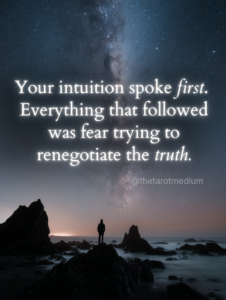
Hospice work has shown me that surrender is rarely soft or serene. It is often stark.
It asks for honesty before comfort. Reality needs to be acknowledged as it is, without numbing it, reframing it too quickly, or trying to extract meaning before the body has caught up. Anything else tends to bypass what actually needs attention.
Spiritual disconnection often appears when the body asks for depth rather than relief.
Practices that once soothed may stop working. Meditation can feel restless. Prayer may land flat. Familiar answers begin to irritate instead of reassure.
This is not regression. It is discernment developing.
What is falling away here is not spirituality itself, but belief structures that were borrowed rather than lived. Those structures loosen, the nervous system can feel unmoored, even if something truer is trying to emerge underneath.
Surrender in this context has nothing to do with escape or transcendence. It is a willingness to stay present without dissociating. Emotions like anger, grief, fatigue, and fear are allowed to surface, but they are not handed the steering wheel. They are information, not commands.
A practical way to navigate this phase is to stop interpreting low energy as failure. Days marked by heaviness or lack of motivation are often requests for recalibration, not productivity.
The body may be asking for fewer inputs, simpler routines, or more honest rest. Listening closely here prevents deeper shutdown later.
The aim is not to restore an old version of faith or certainty. It is to build a form of presence that can withstand reality without abandoning yourself in the process.
For some, disconnection goes beyond emotional numbness and starts to feel unreal or disorienting, something the Mayo Clinic explains clearly in their overview of depersonalization and derealization symptoms, where the mind distances itself as a form of protection.
Why does feeling disconnected hurt so much?
Disconnection hurts because humans are wired for connection, and the body interprets distance as danger.
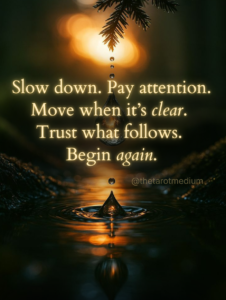
At a biological and emotional level, people are built for connection. Nervous systems develop and stabilize through contact, shared meaning, and felt belonging.
When trust thins, communities fracture, or social rhythms disappear, the body reacts first. Language comes later, if it comes at all.
That gap explains why quick relief becomes tempting. Substances, constant consumption, endless scrolling, or repetitive habits offer stimulation without asking much in return.
They provide sensation, not nourishment. The problem is that stimulation can mask numbness without addressing it.
Numbness does not lift through more input. It eases when meaning reenters the picture.
Meaning does not require grand gestures or fixing anything beyond your reach. It grows through small, deliberate acts that remind the body it is participating in life rather than observing it.
Changing your walking route so attention has to engage. Picking up litter because it places you in relationship with your environment. Offering quiet presence to someone without advice or performance.
Choosing kindness without documenting it or waiting for validation.
These actions matter because they are regulatory. They give the nervous system evidence of agency, contribution, and contact. Over time, they stitch together a sense of belonging that feels earned rather than imagined.
This is where spirituality becomes usable. Not as an abstract belief or an escape, but as lived participation. Showing up in small ways teaches the body what the mind cannot talk itself into.
That sense of moving through life without fully being in it is also explored in this piece on getting out of autopilot when you’re feeling disconnected, which names how awareness often returns gradually rather than all at once.
Am I broken for feeling disconnected from life?
This question often emerges where exhaustion meets self-doubt, not because something is inherently flawed.
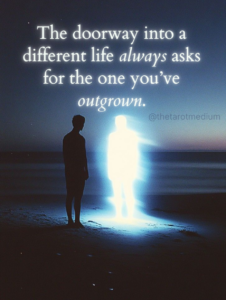
In psychic readings, this concern comes up often, even when it is never voiced outright. People worry about becoming cynical, emotionally closed, or unreachable, and they quietly wonder whether something essential has been lost.
What I have come to understand through experience is this.
Humanity operates as a shared consciousness that forgets itself through the illusion of separation.
That sense of division intensifies during periods shaped by fear, manipulation, and constant pressure to choose sides.
Disorientation takes different forms depending on the person. Susceptibility to influence varies.
Pain finds many expressions. Acknowledging these realities does not require cynicism or denial. It asks for a refusal to strip humanity from anyone involved, including yourself.
The spiritual work of this moment is not found in numbing out or riding waves of outrage.
It lives in the middle ground. Awareness without exhaustion.
Care that does not erase personal limits. Engagement that leaves room for rest.
When darker stretches arrive and internal resources feel thin, the body is often signaling a need for deeper emotional contact rather than solutions.
Naming what is present brings orientation.
Sitting with it without urgency allows the experience to soften and shift on its own terms.
Change is constant, even when it feels stalled. Emotional states move. Perspectives evolve. Nothing stays frozen.
Your role is not to shoulder the weight of the world. What matters more is carrying yourself through it with steadiness, honesty, and care.
Life is shared, even when it feels isolating. Finding your way back after getting lost is part of being human.
If this reflection resonated, I share occasional emails that are thoughtful, grounded, and worth your time.
And for anyone who quietly wonders if this distance means something is wrong with them, this article on understanding emotional brokenness and finding hope speaks directly to that fear without dramatizing it.
You can join here without worrying about spam: subscribe now!
If this article resonated with you, book your private reading with me here.
If any of these speak to what you’re moving through right now, follow the one that pulls at you most:
• Spiritual fatigue: Spiritual Burnout: What No One Tells You and How to Recover
• Quiet clarity: Forget Manifesting: What Actually Creates Lasting Change
• Inner tension: Navigating Loneliness: Beyond Self Love to Genuine Connection
• Nervous system truth: Intuition vs Anxiety: How to Know What to Trust
• Modern compassion: The Weight of Now: A Psychic’s Take on Modern Compassion
• Honest surrender: Why Surrender Feels Impossible Until You Hear This
This article was written by Chris Bennett, an expert Canadian psychic medium and tarot reader whose approach is rooted in steadiness, clear perception, and deep respect for what people are actually living through. With over two decades of hands-on experience, Chris is known for work that is precise rather than dramatic, emotionally attuned without drifting into abstraction, and honest without excess. His readings blend intuitive perception with grounded psychological awareness, often giving language to things people have sensed for a long time but couldn’t quite articulate.
Chris works with clients around the world through online sessions, including across Canada, the United States, the United Kingdom, Australia, New Zealand, and elsewhere. Regardless of location, his intention stays consistent: to meet people where they are, listen without projection, reflect what’s present with care, and offer insight that supports clarity, healthier decisions, and a more settled way forward.
