What If Happiness Isn’t the Goal? Finding Meaning When You’re Grieving or Burned Out
You didn’t land here by accident.
Most people don’t search for something like this in the middle of a good day. They find it late at night.
When the house is quiet but their mind won’t shut off.
When the scrolling keeps going even though nothing is landing.
When sleep feels close but unreachable.
For some, the question isn’t even about happiness anymore. It’s about survival.
About getting through another day without the person who anchored everything.
About going through the motions while part of you feels like it stopped moving a long time ago.
I want to speak to that version of you too.
The one who isn’t dramatic about it.
Who still shows up. Who pays the bills, answers texts, keeps things together on the outside, while inside it feels like life has gone strangely flat.
What if happiness isn’t the goal?
What if staying is.
If you’ve never had a reading with me and want a sense of how I work, the tone, the boundaries, the clarity, you can read what to expect here.
If you want deeper guidance, exclusive offers, and first access to my most requested reading spots, join my email list here (I only send what’s meaningful, never spam)
Why do I feel pressure to be happy all the time?
That quiet sense you should be doing better, feeling better, being more grateful, even when nothing is technically wrong.

There’s an unspoken rule in our culture that pain should come with a plan.
That suffering should be productive. That if something frightening or heartbreaking happens, the next step is to stay positive or visualize a better outcome.
I learned how heavy that expectation can be when my sister was once given a cancer prognosis. Long story short, she survived. But during that time, she confided something in me that has never left me.
Everyone kept telling her to be strong.
To think positively. To picture herself healed. To stay hopeful. And while it all came from love, she said it felt unbearable.
Like she had to perform wellness while her world was falling apart. Like there was no room to simply be terrified, exhausted, or unsure.
What she wanted wasn’t encouragement. It was permission.
Permission to feel what she was feeling without being coached out of it. Permission to not have to do anything with her emotions. Permission to not be inspirational.
That experience changed how I listen to people. It mirrors what I see constantly in hospice as well.
People who have spent their lives taking care of others suddenly find themselves on the receiving end of care that doesn’t quite fit.
They’re fed. Reassured. Talked at. But rarely asked the right questions.
Not how are you staying positive, but what does this feel like today.
Not what can we do to fix this, but what feels hardest right now.
“Tell me more about that.” is the simplest phase you can say to allow someone to be truly heard.
There’s a difference. And it matters.
Why does happiness never seem to last?
The harder you try to hold onto happiness, the more it behaves like something that was never meant to be held.

Happiness is a feeling. And feelings are weather.
For someone who has lost a partner, a child, a parent, or someone who felt like home, happiness can feel distant or even inappropriate. When it does appear, it often brings guilt with it. As if joy somehow betrays love.
I hear this often in mediumship sessions. People will say, quietly, I had a good moment and then I missed them even more. Or, I laughed and immediately felt wrong for it.
That isn’t a sign of being stuck. It’s a sign that love still has gravity.
The harm happens when happiness becomes the standard by which we judge whether someone is healing correctly. Or living correctly.
Most people aren’t chasing happiness. They’re chasing relief. Relief from the ache that never fully leaves. Relief from the background hum of sadness, fear, and exhaustion.
Relief doesn’t come from forcing yourself to feel better. It comes from being allowed to feel exactly what’s already here.
If you’ve noticed that chasing happiness has left you more tired than fulfilled, this reflection from The Vessel on what changes when you stop pursuing happiness puts gentle language to a realization many people reach quietly.
What’s the difference between being present and being happy?
There’s a steadiness available that doesn’t require you to feel good, only to stop leaving yourself.

Presence doesn’t sparkle. It doesn’t motivate. It doesn’t come with affirmations.
Presence feels like sitting with someone without trying to change their experience. Like letting silence do some of the work. Like not rushing to fill the space with advice.
In hospice, presence is everything. You learn quickly that answers don’t comfort people. Being witnessed does.
The same thing happens in readings.
Often the most meaningful moments aren’t about insight or prediction. They’re about reflection. Helping someone put words to what they’re already carrying. Naming the emotion so it doesn’t feel so isolating.
That is one of the most important things I’ve learned so far in this lifetime. People don’t need answers nearly as much as they need the right questions.
Questions that allow them to arrive at their own conclusions. Questions that let them hear themselves clearly.
You can be a mirror without directing the outcome.
Happiness may or may not show up in those moments. But presence almost always does. And presence steadies the nervous system in a way forced positivity never will.
When happiness feels distant but something deeper still seems to matter, this piece from Psychology Today on what matters more than happiness offers a grounded psychological lens that helps explain why.
How do I know what intuition actually feels like?
Intuition is simpler than we think, and the mind is what complicates it.

Intuition is often misunderstood as something dramatic or mystical. In reality, it’s very simple.
It’s the awareness behind your thoughts, your emotions, and your body.
It’s the part of you that notices a thought without immediately believing it. That notices an emotion without trying to manage it. That senses the body without rushing to change what it’s feeling.
That sounds easy, but it’s actually difficult for most people because we’re trained to manage everything. To prioritize. To reply. To react. To have an opinion. To stay productive.
All of that comes from the ego. Not in a negative sense. The ego is the part of you that keeps you alive. It moves you from one experience to the next. It drives you to eat, to work, to set goals, to protect yourself.
But awareness is different.
Awareness is soft. Imperishable. It isn’t trying to get anywhere. It isn’t threatened by uncertainty. It simply observes.
I often describe it as stepping out of the front seat and into the back seat. You’re still in the car. You’re still part of the journey. But you’re no longer gripping the wheel with white knuckles.
From that place, intuition isn’t about predicting the future. It’s about sensing timing.
Not everything is set in stone. Fate doesn’t work that way. Your free will matters deeply. But there also seems to be an order to things. A timing that unfolds when you stop forcing outcomes and start listening more closely.
One of the most striking examples of this I’ve encountered came through a podcast called The Telepathy Tapes.
It explores nonverbal autistic individuals and their profound telepathic experiences with caregivers.
What stood out to me was how simple the mechanism was.
The connection worked because the receiver believed in them.
That was it.
No technique. No strain. No performance. Just trust, presence, and openness.
Intuition works the same way. It becomes clear when you stop demanding proof and start allowing awareness to do what it naturally does.
If you’re unsure whether you’re following intuition or reacting from anxiety, especially when emotionally overwhelmed, this thoughtful article from The Good Trade on intuition versus anxiety helps clarify the difference without oversimplifying it.
What matters more, happiness or meaning in life?
A life can feel heavy and still be meaningful, connected, and deeply worth living.

Meaning doesn’t require enthusiasm. It requires relationship.
Relationship to your grief. To your memories. To the people you’ve loved and still love. To the values that didn’t disappear just because someone did.
In hospice, meaning shows up in small, human ways.
A hand being held and a story being told one last time is what most envision.
In reality it’s someone finally feeling safe enough to say how scared they are, on their own terms.
To be witnessed by an unbiased person one last time.
Hospice is my church. Life is my teacher.
None of that is happy. All of it matters.
For those who feel like they’re just going through the motions, meaning may look like continuing to show up without forcing inspiration.
It may look like letting yourself rest without justifying it. It may look like allowing someone to witness you without trying to protect them from your truth.
That counts.
For moments when life feels rushed and overstimulated and you’re craving steadiness more than joy, this reflection from The Skeptic’s Path on presence and mindfulness reframes being present as something quieter and more sustainable than happiness.
What happens when you stop chasing happiness?
When you stop demanding a specific feeling from life, something quieter and more reliable begins to take root.

When people stop chasing happiness, their system often softens. The constant self monitoring eases. The pressure to perform healing fades.
What replaces it isn’t despair. It’s honesty.
Small moments become accessible again. Not because life suddenly improves, but because you’re no longer measuring every moment against how it should feel.
The most grounded people I meet aren’t the happiest ones. They’re the ones who stopped fighting reality. Who let joy and grief coexist. Who allowed themselves to be human without turning it into a problem to solve.
They didn’t move on.
They stayed with.
And if you’ve ever wondered why happiness slips away even when nothing is obviously wrong, this personal essay on Medium about the fleeting nature of happiness speaks honestly to that familiar, unsettling feeling.
Am I behind in life if I’m not happy yet?
There is no missed timeline here, only a human nervous system doing its best to keep up.

If you’re reading this while feeling empty, exhausted, or quietly hopeless, there is nothing wrong with you.
You are responding to loss. To a divided world. To constant stimulation. To subscriptions you didn’t realize were draining you. To doom scrolling that keeps your nervous system alert long after your body wants rest. To insomnia fueled by too much information and not enough safety.
You don’t need to be happier to justify staying alive. You don’t need to be inspirational to be worthy of care.
Sometimes the most meaningful thing you can do is allow yourself to be exactly where you are without being rushed out of it.
As someone who sits with the dying and speaks with the dead, I can tell you this. The love you shared didn’t end because the body did. And your life is not over because it feels unrecognizable right now.
Happiness will visit when it does. Quietly. Briefly. Without effort.
But your life does not need to wait for happiness to be valid.
Staying is enough.
If this article resonated, I send out the occasional email that actually matters.
You can join here without worrying about spam: subscribe now!
If this article resonated with you book your private reading with me here.
If any of these speak to what you’re moving through right now, follow the one that pulls at you most:
• Meaning after loss: Finding Meaning When Life Doesn’t Go as Planned
• Emotional fatigue: Why You’re Always So Tired and What Your Soul Is Trying to Say
• Spiritual burnout: Spiritual Burnout: What No One Tells You and How to Recover
• Quiet intuition: How Tarot Strengthens Intuition Even If You Don’t Believe in It
• Nervous system clarity: Intuition vs Anxiety: How to Know What to Trust
• Staying grounded: What Really Matters When Everything Is Temporary
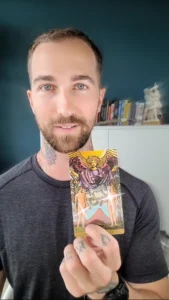
This piece was written by Chris Bennett, a Canadian psychic medium and tarot reader whose work centers on calm clarity, emotional presence, and respect for the reality of human experience. With more than twenty years of direct practice, Chris is known for readings that are grounded and specific, compassionate without being abstract, and truthful without adding unnecessary weight. His style weaves intuitive awareness with psychological insight, helping people notice patterns and truths they’ve often felt but struggled to name.
Chris reads for clients internationally through online sessions, connecting with people across Canada, the United States, the United Kingdom, Australia, New Zealand, and beyond. Whether someone lives in a major city or a quiet rural place, the focus remains the same: to listen without agenda, reflect what’s genuinely unfolding, and offer insight that supports thoughtful choices, meaningful relationships, and steady forward movement.